





Halfway up a glacier in Italy’s Graian Alps, in pitch-black darkness, a snow bridge gave out, dropping a climber straight down into a crevasse.
But his teammates caught his fall on the rope line, hauled him back onto the ice and kept moving. They didn’t dwell on what just happened, but focused on the thousands of feet of glacial ice and sheer rock still between them and the 13,300-foot summit of Gran Paradiso.
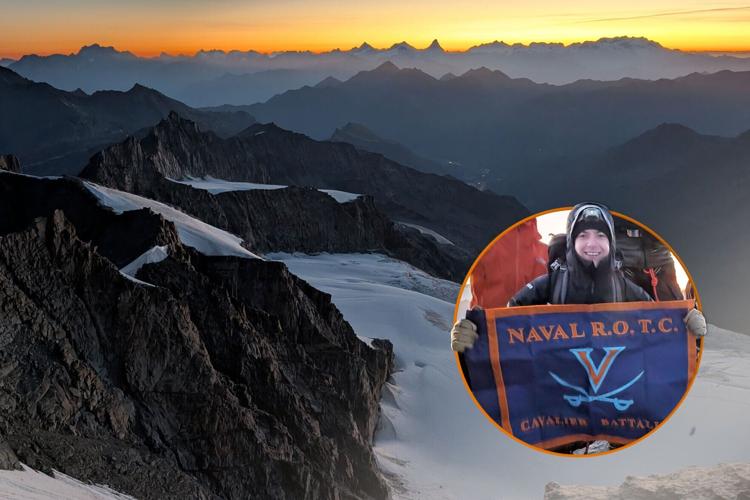
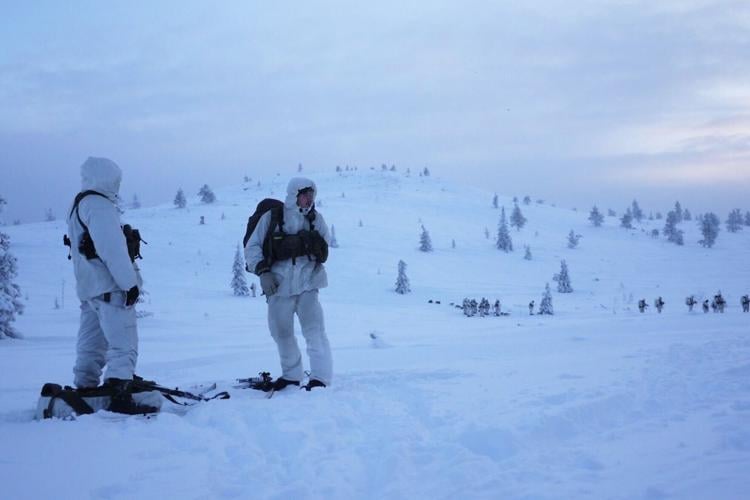
Tied into that rope team was Giacomo McDowell, a University of Virginia second-year student majoring in environmental sciences. While many college students spend summer breaks working standard desk jobs, McDowell, a midshipman in UVA’s Navy ROTC, spent his summer fighting subzero winds alongside active-duty Swedish Army Arctic Rangers.
McDowell has a history with both mountain climbing and Sweden. Growing up in Stockholm, McDowell and a close friend trekked 80 miles through remote Arctic terrain the summer before their high school graduation to summit Kebnekaise, Sweden’s highest peak, sparking a shared obsession with mountaineering.
People are also reading…
Afterward, their paths diverged. McDowell’s friend was conscripted into the Swedish Armed Forces and selected for the K4 Arctic Ranger Regiment, while McDowell followed his path to Charlottesville and the Navy ROTC.
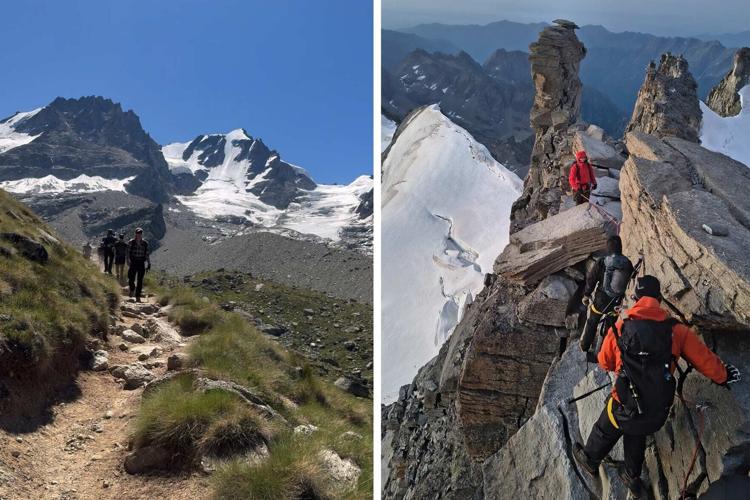
A year and a half later, they reconnected to plan an alpine climb. Permit problems for climbing Mont Blanc, on the French-Italian border, redirected their sights to Gran Paradiso, the highest summit entirely within Italy. To handle the technical demands, his friend recruited comrades from his military unit.
The team’s preparation varied. Two rangers acclimated by tackling Kebnekaise twice in winter conditions, while a mountain warfare specialist brought advanced rope-handling skills. McDowell leaned on reconnaissance from hiking the 120-mile Tour du Mont Blanc in 2024. The group was joined by two local Italian guides, Amadeo and Christophe, who supplied technical gear and route expertise.
The initial plan called for a 4 a.m. departure from the Chabod Refuge base camp following a 3,000-foot approach hike, but the group faced a tight deadline to reach the Cinque Terre region around Genoa that same afternoon. They asked to set off four hours earlier.
“Our guides laughed it off, saying it wouldn’t be possible,” McDowell said. The six hours they would have had to sleep turned into only an hour and a half. On top of that, none of them knew whether their headlamps would last for four hours, since they had originally planned to journey in the morning light. “Our guide Amadeo said, ‘Well, we have never taken a group up in the dark, but you all seem to enjoy suffering, so let’s do it.’”
McDowell and companions felt the freeze on the mountainside, fighting through subzero temperatures, dehydration and a lack of sleep during the expedition.
After a few sleepless hours, they split into two four-man teams and pushed ahead. They hiked 5,000 vertical feet by the light of their headlamps. Subzero glacial winds numbed McDowell’s fingers, and dehydration and altitude sickness brought bouts of dizziness. Then came the snow bridge’s collapse.
Shortly after the team pulled the fallen ranger from the crevasse, they pushed through their exhaustion and reached the summit just as dawn broke.
“The first warm rays of sunlight had just begun to creep up over the horizon,” McDowell said. “Looking down at the refuge, we were blessed to have the entire mountain to ourselves as the long conga line of headlamps departing from Chabod Refuge began pushing up the glacier below.”
To make the climb, McDowell said he leaned heavily into the training he received on Grounds. Twice-weekly ROTC physical training, paired with personal workout regimens, provided the physical baseline, while the command structure and the Navy and Marine Corps leadership principles provided the rest.


