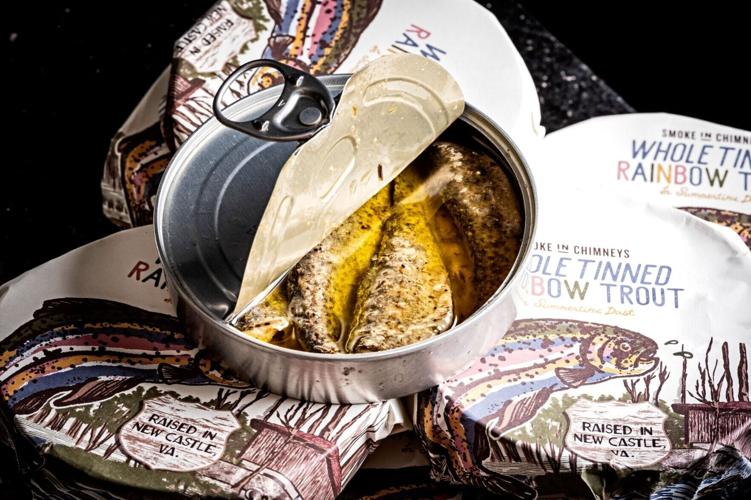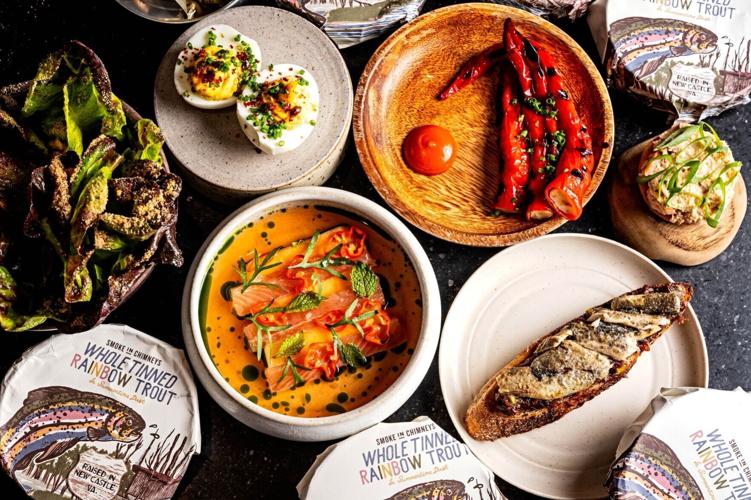



Take Route 42 south out of New Castle in Craig County and, just beyond the shoulder of Aps Knob, a two-story red house stands close to the road amid an array of narrow basins. The three trout stickers and hand-written address decorating the front of the mailbox are the only indications that you’ve arrived at Smoke in Chimneys, rapidly becoming one of the country's most popular sources of farmed trout.

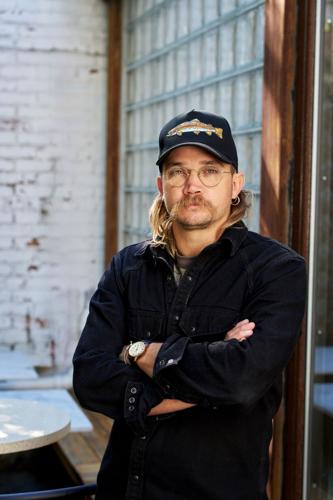
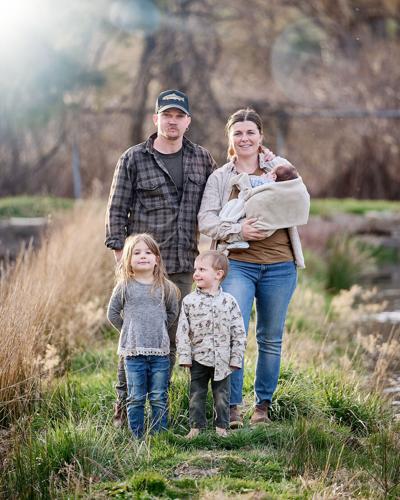
Owner Ty Walker, 35, and his wife, Shannon, opened Smoke in Chimneys in 2022 after farming on his grandparents’ 300 acres in Franklin County. While looking for a place to call their own, they discovered the four-acre property tucked between Sinking Creek and Johns Creek mountains.
“We came here and … you just have those God moments in life when ‘this is what I need to be doing,’” says Ty Walker, as he walks the property on a bright, breezy autumn afternoon while two of his four young children, Gratton, 6, and Carr, 3, play nearby. Meadow, the family’s Great Pyrenees trails behind him.
People are also reading…

The business’s name refers to the two timeworn chimneys standing on Walker’s grandparents’ farm. Smoke coming from chimneys is a sign of life and progress, he says.
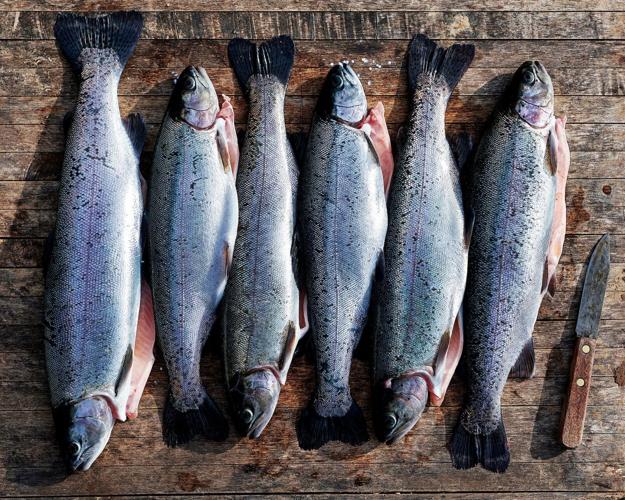
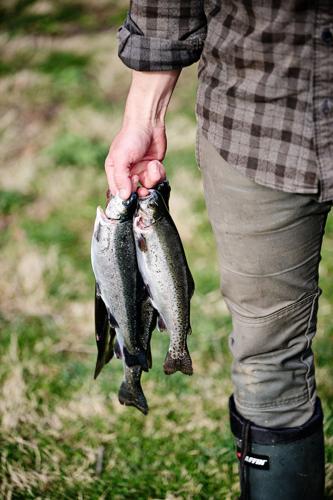
On Walker’s property, thousands of rainbow trout swim in long ovals through cold, clear water piped from the spring across the road. In the distance, two mountain cur dogs loaf in the sun by their houses — they’re the security guards that fend off hawks, otters, and other opportunists seeking an easy meal.

The journey from family farm to fish hatchery wasn’t easy. Walker knew nothing about raising fish when he took over the 90-year-old property. He taught himself using “Hewitt’s Trout Raising and Stocking,” a century-old guidebook on hatchery management.
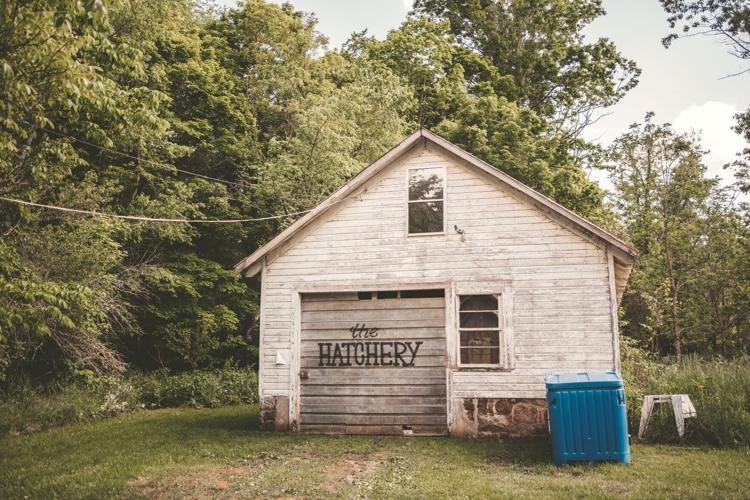
Meanwhile, he spent months mucking out the ponds and restoring the derelict hatchery to production. Then he took another year working on the state permits needed to process the trout for market.
“By the end of the year, I was totally broke,” he says. He worked at a grocery store to make ends meet between weekends at local farmers markets and selling fish door-to-door to chefs up and down the Shenandoah Valley and into Northern Virginia.
Two years ago, he even hit the streets of New York City with a cooler of fish, taking his message directly to some of the country’s top chefs. “It takes some level of tenacity because it’s 2025, and you can get anything flown in from anywhere in the world,” he says. “Chefs want to buy, but they want to be sold.”
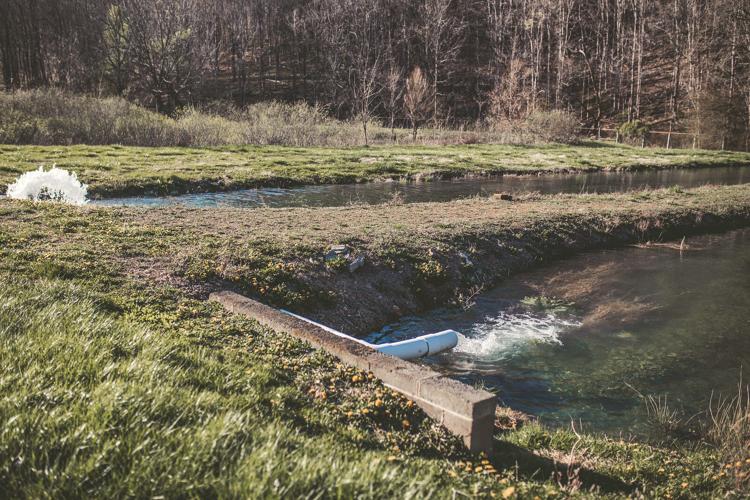
One of Walker’s biggest selling points is the water that flows through his ponds. Every minute, 3,000 gallons of crystal clear spring water rise from the base of Sinking Creek Mountain. The water is 54 degrees and filled with the minerals and nutrients that Walker’s trout thrive on.

A few dozen yards from the ancient, barn-like spring house, part of the stream dives into an equally ancient 16-inch cast iron pipe that feeds the ponds across the road. A heavy, T-shaped wrench opens and closes the valve that controls the flow. The same water flows through the pipes in his house on the hatchery property.
The water sets Smoke in Chimneys apart from other hatcheries that recirculate their water, filtering it and pumping in oxygen to keep the fish healthy, Walker says.
At the end of Smoke in Chimneys’ water system, the spring water flows over a wooden weir and enters Meadow Creek on its way to join the James River. Native rainbows swim in the creek just a few feet from their captive cousins.
Smoke in Chimneys encapsulates Walker’s belief in the trinity of farm, food, and prayer. It also answers the Biblical call to be a steward of the environment. “You have a bunch of different schools of thought, but mine is, ‘we’re all in this thing together,’” he says. “How can we as human beings create a net positive impact? How can I come out ahead while the wild fish in the stream come out ahead? You want to preserve the resources that you’ve been given so they can be enjoyed after you.”

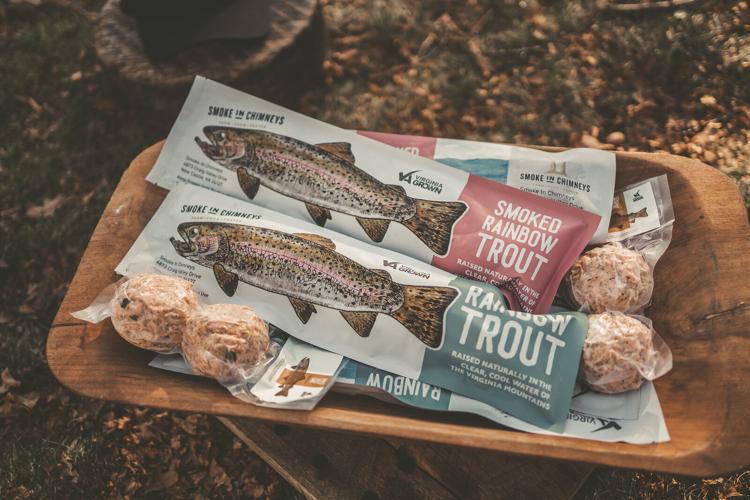
Every Monday, Smoke in Chimneys harvests, processes, and ships fish from New Castle via UPS. In most cases, the packages of fish are at their destination the next day.
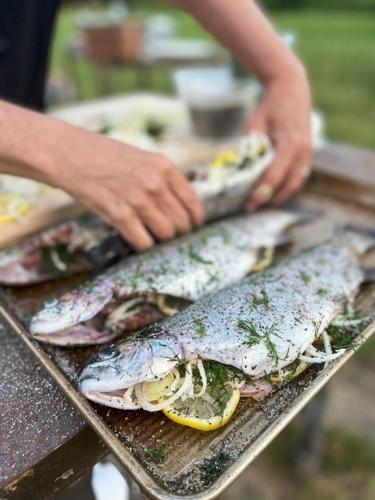
Neal Wavra, chef-owner of Field & Main Restaurant in Marshall, says Walker imbues his fish with a quality that’s hard to find elsewhere. “It’s become a favorite of our guests and a perennial on the menu,” says Wavra, who waited nearly a year to get on Walker’s client list. Since then, he has become a bit of a Smoke in Chimneys evangelist, spreading the word to his restaurateur friends far and wide.
Staunton’s award-winning Chef Ian Boden is the latest Smoke in Chimneys convert, having signed on after an event with Wavra at Boden’s Maude & the Bear. Chef José Andrés is a Smoke in Chimneys client, as is Brush Sushi in Atlanta and The Inn at Little Washington.
“It’s pretty hard work, and it’s hard to find help,” Walker says, standing ankle deep in the chilly creek to clear fallen maple leaves from two of the nets upstream from the hatchery’s intake pipe. “You’re dealing with Michelin-star chefs every week. It’s not a very chill crowd.”

While his current clients have high standards, they also come with the perk of dining at some of the country’s best restaurants. At Chicago’s Smyth, a three Michelin-starred restaurant, Chefs John and Karen Shields gave Walker an unforgettable experience by taking over their quiet restaurant background to play Skynyrd’s Greatest Hits.
In the end, Walker’s tenacity, backed up by a generous helping of hustle, has paid off in more ways than one. “What I’ve learned over six years is that I haven’t built Smoke in Chimneys as much as it has built me,” he says. “I’m a different person than I was.”
Smoke in Chimneys