

With the arrival of fall and the excitement of the coming holiday season, you’re probably not thinking about your summer lawn — but you should be.
Autumn is make-or-break time if you want a lush green yard come spring, and these are the most important things you need to do now to prepare your lawn for winter.

“First and foremost at the beginning of fall, you should be thinking about aeration and seeding,” said Will McEwen, Technical Quality Adviser for Virginia Green, the top lawn care service in Virginia. “This is the most important way to fill in thinning grass and brown spots so you’ll have a thick, green lawn next year.”
Over the summer, soil becomes compacted, which prevents water, nutrients and oxygen from reaching the roots. Aeration creates small holes in the lawn to correct this, and seeding the holes at the same time will fill in any bald spots and allow your grass to thrive again. This should be done by Thanksgiving at the latest.
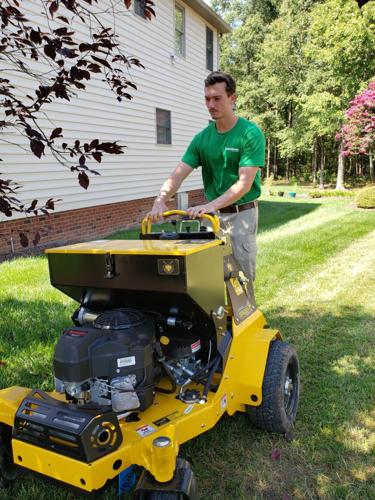
It’s important to have aeration and seeding done professionally — hand tools and rented machines won’t give you the best results. Virginia Green uses complex, state-of-the-art equipment with experienced operators who have been specially trained to use these tools to achieve the best results.
“The second thing you want to do is make sure you fertilize,” said McEwen. “You’ll need a starter fertilizer within 30 days of seeding, followed about 30 days later by a wintering fertilizer, which has more nitrogen and really helps build strength in your grass so it can handle the winter cold.”
Fertilizing should also be done before the end of November and by a professional. If you do it yourself and miss a spot, it will be lighter green than the rest of your lawn — and if you apply too much or use the wrong type of fertilizer, it can injure the grass.
The spreaders Virginia Green uses are in a different league from anything you can rent at a big box store. They’re much larger, sit higher off the ground and spread over a wider range, giving you much more consistent results. Equally important are the people who perform this service — they’ve all undergone extensive training and received certification as fertilizer applicators.

“When water freezes inside your irrigation system, it expands and can crack the pipes,” said McEwen. “So by early November, before the ground is completely frozen, it’s important to winterize it.”
There are two ways to do this. You can cut off water to the outside areas, drain your pipes and hoses, and store the hoses indoors. For more thorough protection, water can be blown out of the system with an air compressor, a job that should be done only by a trained irrigation contractor.
Remove leaves and other debris
Throughout fall and winter, be sure to remove leaves, pine needles and cones, sticks and other debris at least once a week. If you don’t, they’ll block the sun that grass needs and trap water, which can cause rot and disease. The method you use to remove them is key — be sure to use an air blower, which won’t mulch debris into the lawn and damage it the way a rake or mower can.
And here’s another tip: If the ground is frozen, stay off the lawn. That’s when the grass is most fragile and can be easily crushed.
Click here to learn more about Virginia Green’s lawn care services.